Troubleshooting
Network Troubleshooting Methodology
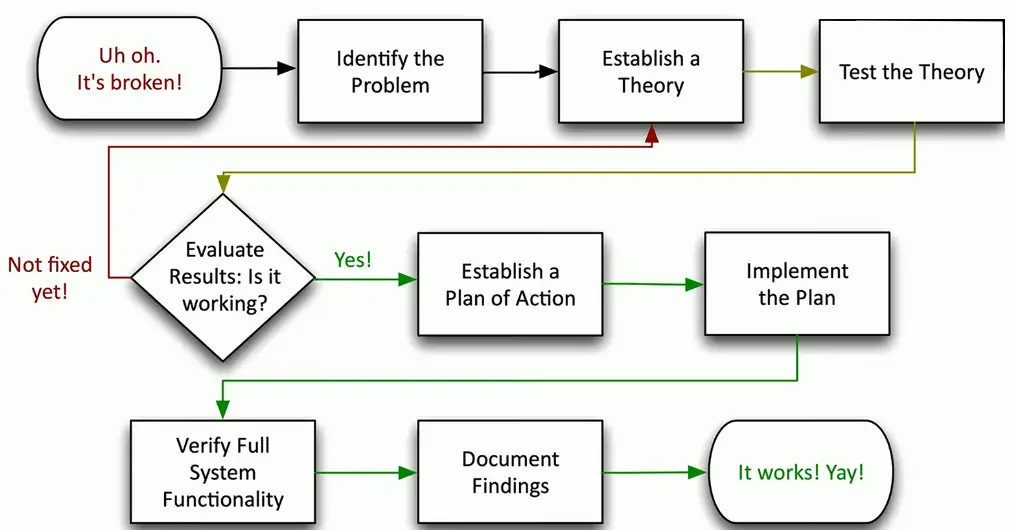
Identify the problem
Gather information
- Get as many details as possible
- Duplicate the issue, if possible
Question users
- Your best source of details
Identify symptoms
- May be more than a single symptom
Determine if anything has changed
- Who’s in the wiring closet?
Duplicate the problem, if possible
- The issue is much easier to troubleshoot if you can see it happening
Approach multiple problems individually
- Break problems into smaller pieces
Establish a theory of probable cause
Start with the obvious
- Occam’s razor applies
Consider everything
- Even the not-so-obvious
- Examine the problem from the top of the OSI model to the bottom
- And then from the bottom to the top
Divide and conquer
- Break the problem into smaller pieces
- Remove the pieces that don’t apply
Test the theory
Confirm the theory
- Determine next steps to resolve problem
Theory didn’t work?
- Re-establish new theory or escalate
- Call an expert
Create a plan of action
Build the plan
- Correct the issue with a minimum of impact
- Some issues can’t be resolved during production hours
Identify potential effects
- Every plan can go bad
- Have a plan B
- And a plan C
Implement the solution
Try to fix
- Implement during the change control window
Escalate as necessary
- You may need help from a 3rd party
Verify full system functionality
It’s not fixed until it’s really fixed
- The test should be part of your plan
- Have your customer confirm the fix
Implement preventive measures
- Let’s avoid this issue in the future
Document findings
It’s not over until you update the knowledge base
- Important lessons were learned
- Don’t lose valuable knowledge!
Consider a formal database
- Help desk case notes
- Searchable database
Troubleshooting a network
Let’s recap:
Identify the problem:
- Information gathering, identify symptoms, question users, determine if anything has changes
Establish a theory of probable cause
- Question the obvious
Test the theory to determine cause
- Once the theory is confirmed, determine next steps to resolve the problem.
- If theory is not confirmed, re-establish new theory or escalate.
Establish a plan of action to resolve the problem and identify the potential effects
Implement the solution or escalate as necessary
Verify full system functionality and, if applicable, implement preventative measures
Document finding, actions and outcomes