A computer network is a digital telecommunications network for sharing resources between nodes, which are computing devices that use a common telecommunications technology.
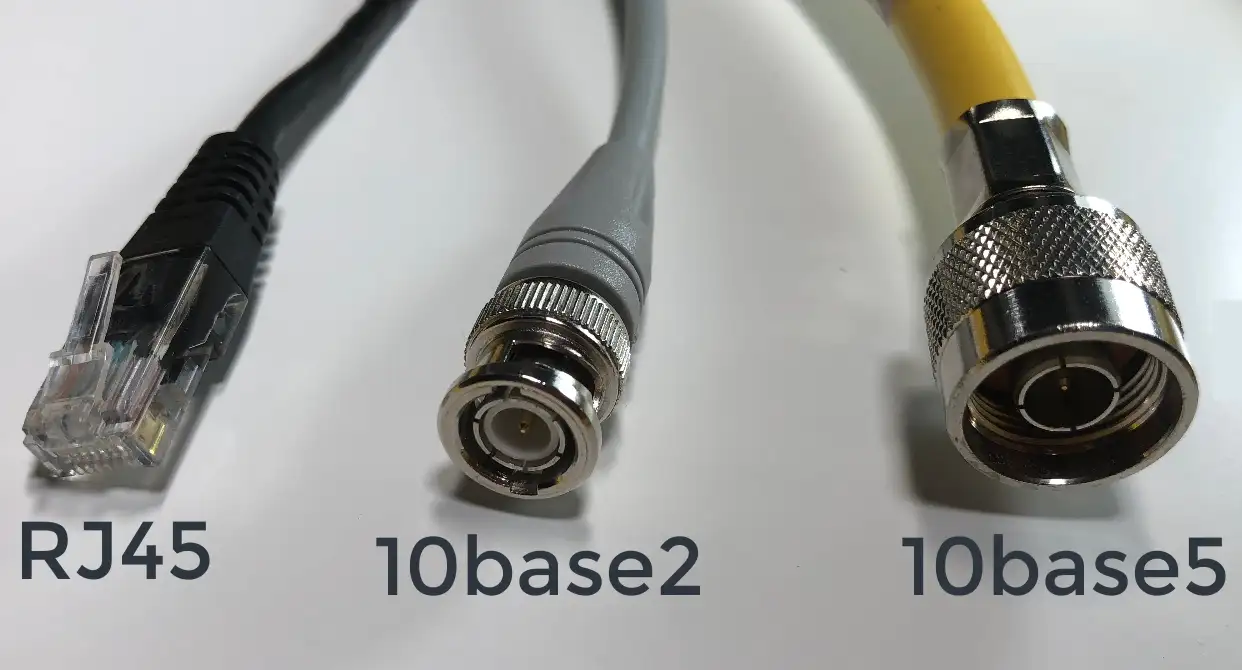
Data transmission between nodes is supported over data links consisting of physical cable media, such as twisted pair or fiber-optic cables, or by wireless methods, such as Wi-Fi, microwave transmission, or free-space optical communication.
Resources include:
Printers, file sharing, USB etc.
Most Basic Type of Network
Two computers, sharing resources through any digital medium, can be called as the most basic type of network.
NIC (Network Interface Card) is used to connect to physical or wireless networks.
Media Access Control Address (MAC Address)
A media access control address is a unique identifier assigned to a network interface controller (NIC) for use as a network address in communications within a network segment.
This use is common in most IEE 802 networking technologies, including Ethernet, Wi-Fi, and Bluetooth.
AirDrop
AirDrop creates its own Wi-Fi network that allows two devices to share files without the need for any other Wi-Fi networks.
Modulation
Modulation is the process of varying one or more properties of a periodic waveform, called the carrier signal, with a modulating signal that typically contains information to be transmitted.
Most radio systems in the 20th century used frequency modulation (FM) or amplitude modulation (AM) for radio broadcast.